
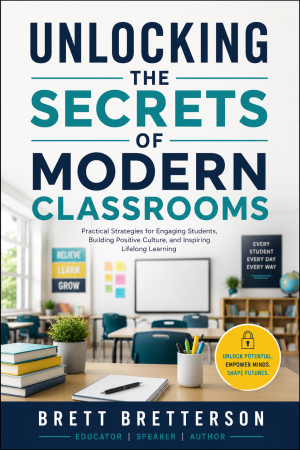
The landscape of education continues to evolve at an incredible pace. Between changing student needs, emerging technologies, new instructional strategies, and shifting expectations, educators are constantly adapting their approach to meet the demands of modern classrooms. Books that encourage reflection while offering practical guidance can be valuable resources for teachers at every stage of their careers.
Unlocking the Secrets of Modern Classrooms by Brett Bretterson aims to explore many of the opportunities and challenges that educators encounter in today’s schools. Rather than focusing solely on theory, the book presents ideas designed to help teachers think critically about instructional practices, student engagement, and creating learning environments that support every student.
Whether you’re a new teacher looking for practical strategies or an experienced educator searching for fresh inspiration, this book offers a framework for thinking about how classrooms can continue evolving to better serve today’s learners.
At its core, Unlocking the Secrets of Modern Classrooms examines what effective teaching looks like in today’s educational landscape. The book discusses topics that many educators encounter daily, including classroom culture, student motivation, differentiated instruction, collaboration, technology integration, and fostering meaningful learning experiences.
Rather than presenting education as a collection of rigid formulas, Brett Bretterson encourages readers to remain flexible and reflective in their teaching. The emphasis is placed on understanding students as individuals while creating classroom systems that promote both academic growth and personal development.
Throughout the book, readers are introduced to concepts that encourage teachers to evaluate their existing practices, consider alternative approaches, and identify opportunities for continuous improvement. The writing balances practical classroom applications with broader discussions about educational philosophy, making the material accessible to educators working in a variety of grade levels and subject areas.
One of the book’s recurring themes is that successful classrooms are built intentionally. Effective instruction involves more than simply delivering content—it requires cultivating relationships, designing engaging experiences, and creating environments where students feel comfortable taking intellectual risks.
One of the strengths of Unlocking the Secrets of Modern Classrooms is its focus on the interconnected nature of effective teaching. Rather than isolating individual strategies, the book illustrates how classroom management, instructional design, assessment, communication, and student engagement all influence one another.
The discussion surrounding student engagement is particularly relevant. As attention spans shift and educational expectations continue changing, educators must continually evaluate how lessons capture students’ interest while maintaining academic rigor. The book encourages teachers to move beyond passive instruction and create opportunities for students to actively participate in their own learning.
Another important topic explored throughout the book is adaptability. Every classroom contains students with unique strengths, challenges, learning preferences, and backgrounds. Bretterson emphasizes that effective educators remain responsive rather than relying on one-size-fits-all instructional methods.
Technology also receives thoughtful consideration. Instead of portraying digital tools as solutions to every educational challenge, the book encourages intentional implementation. Technology is presented as a means of enhancing learning when used strategically rather than replacing sound instructional practices.
The book additionally highlights the importance of fostering positive classroom culture. Students are more likely to participate, collaborate, and persevere when they feel respected, supported, and valued. Establishing trust between teachers and students becomes an essential foundation upon which meaningful learning experiences are built.
Many professional development resources offer inspiring ideas but leave educators wondering how to translate those concepts into everyday practice. One of the appealing aspects of Unlocking the Secrets of Modern Classrooms is its practical mindset.
Readers are encouraged to reflect on their current instructional approaches while considering manageable adjustments that could improve student outcomes. Instead of advocating sweeping changes overnight, the book emphasizes continuous growth through intentional reflection and incremental improvement.
This practical perspective makes the content useful for educators across multiple settings. Classroom teachers, instructional coaches, administrators, and education specialists may all find concepts that prompt discussion within their schools or professional learning communities.
Because educational environments vary significantly from one district to another, the book avoids suggesting that there is only one “correct” way to teach. Instead, readers are encouraged to evaluate recommendations through the lens of their own students, curriculum, and community.
Unlocking the Secrets of Modern Classrooms serves as a thoughtful reminder that effective teaching is an ongoing process of learning, adapting, and refining. The book encourages educators to embrace curiosity—not only for their students but for themselves as professionals.
Its greatest strength lies in its balanced approach. Rather than focusing exclusively on educational theory or providing a checklist of classroom techniques, the book blends reflection with practical application. This combination makes the material approachable while still encouraging meaningful professional growth.
The emphasis on student-centered learning reflects many of the conversations currently taking place throughout education. Topics such as engagement, collaboration, differentiation, and intentional technology use continue to shape modern classrooms, and the book provides a framework for considering how these elements work together.
Perhaps most importantly, Bretterson reinforces the idea that excellent teaching is never static. The most successful educators continually evaluate what is working, seek feedback, remain open to new ideas, and adjust their practices to better serve students.
While every reader will naturally bring their own experiences and perspectives to the book, its central message—that great classrooms are intentionally designed through thoughtful, reflective teaching—offers valuable food for thought for educators seeking continued professional growth.
Have you read Unlocking the Secrets of Modern Classrooms by Brett Bretterson? We’d love to hear your thoughts.
Which ideas or strategies resonated most with your own classroom experience? Did the book challenge any of your assumptions about teaching, student engagement, or instructional design? Were there concepts you’ve already implemented successfully, or new approaches you’re excited to explore?
Education is constantly evolving, and some of the best professional learning happens when educators share their experiences with one another. Whether you agreed with the author’s perspective or found yourself questioning certain ideas, your insights can help fellow teachers continue the conversation.
Leave a comment below and let us know your biggest takeaway from the book. What lessons have had the greatest impact on your classroom, and what advice would you offer to other education professionals looking to create engaging, student-centered learning environments?
Grow Professionally offers self-paced, graduate-level courses for busy educators. Earn credits while growing your practice.



One Response
Wow, what an amazing article. I think it really understands what makes Brett’s perspective so insightful.